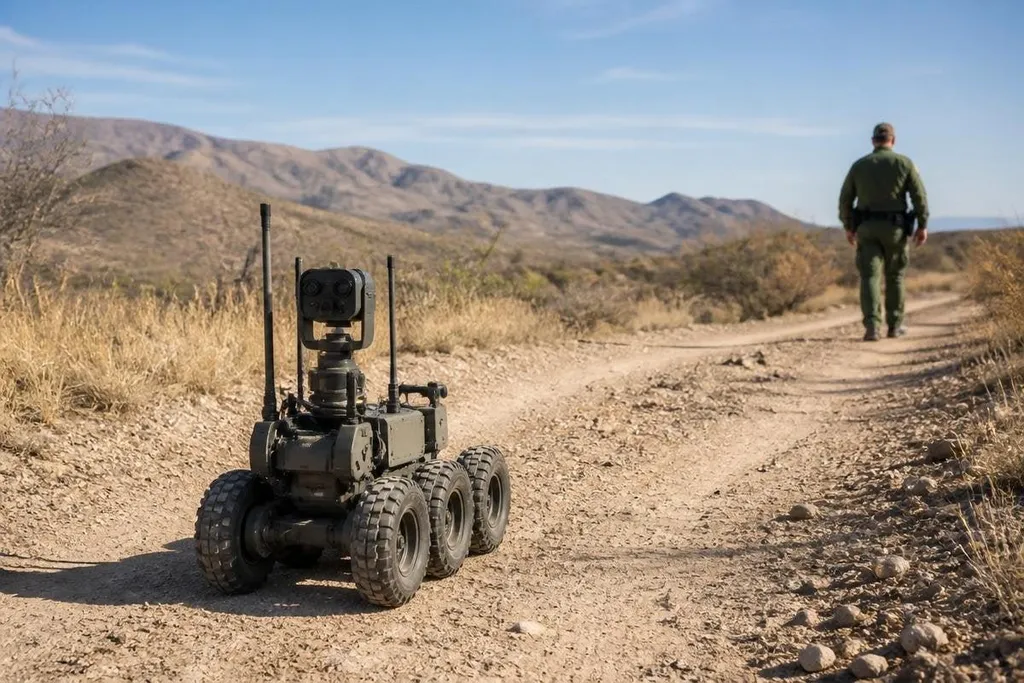
A ground robot can carry cameras and sensors through rough border terrain without putting a patrol officer in the same place. That could change how teams spot movement, check routes, and send help, but no evidence pack here confirms a current deployment, price, or field result.
- Robots could patrol set routes and send video to a remote operator.
- Sensors may work at night or in poor weather, depending on the hardware.
- A person still needs to check what the system detects before enforcement begins.
Where robots could help
A small ground robot could travel along a marked route and send back video, thermal images, or location data. A larger system might carry extra batteries, radios, or medical gear. The useful task is clear: collect information in places that are hard or risky for people to reach.
That does not mean the robot understands who is crossing a border or why. A camera may record a person, animal, vehicle, or shadow. Software can flag a shape, but an operator must check the image and decide what action is lawful and safe.
A drone could cover more ground from the air, but a ground robot can stay near a trail, fence, or road for longer periods if its battery and communications link support the job. The choice depends on terrain, range, weather, and the time needed for a human to respond.
The systems behind the patrol
A border robot would need more than wheels and cameras. It would need a navigation system, a radio link, obstacle detection, and a way to stop when a person or animal enters its path.
Some systems use LiDAR, which measures distance with laser pulses. Others rely on cameras, satellite location, or a map made from earlier sensor readings. Each method has limits.
Dust, rain, darkness, trees, steep ground, and weak radio coverage can reduce the quality of the data or stop the robot from moving.
Remote control adds another limit. If the link drops, the robot needs a defined safe action, such as stopping and waiting. A system that keeps moving without a working operator link creates a safety problem, especially near roads, homes, or people.
A safe-stop claim needs more than a product page. Border robotics field reports can name the robot, radio link, test site, date, and operator action, giving the next section a clear record of what could go wrong.
What could go wrong
The main risk is a wrong alert followed by a rushed response. A robot may detect motion but cannot explain the situation. Poor sensor data can send officers to the wrong place, delay help, or put people under extra pressure.
Privacy also needs a clear limit. Cameras and thermal sensors can collect information about people who are not suspected of breaking any law. A serious plan would state what gets recorded, how long it stays stored, who can view it, and when it must be deleted.
Weapons create a separate line. When the robot watches and reports, a person has time to assess an event. A system that chooses and uses force removes that pause. I'd reject any border robot that can make a force decision without a human taking direct responsibility.
No source material supplied for this article confirms that a named border agency operates such a system, so claims about current use should wait for a contract, test report, or agency record.
Checklist for judging a proposal
Use these questions before treating a border-robot plan as ready for field work:
- Ask for the model, sensor list, weight, battery time, and operating range.
- Check how the robot behaves after a lost radio or satellite link.
- Require test results from the actual terrain, weather, and lighting conditions.
- Set a named human role for every alert, stop command, and enforcement decision.
- Publish rules for data storage, access, deletion, and public complaints.
- Separate patrol, rescue, and force functions in the system design.
A useful pilot would report false alerts, missed detections, stopped missions, repair time, and the number of cases where a person overruled the software. Those figures would tell you far more than a video of a robot driving along an empty trail.
The next serious question is not how far the robot can travel. It is how often the system works under poor conditions, and who remains responsible when it gets a person wrong.